Exponential approximation of the Heidler function for the reproduction of lightning current waveshapes
Abstract
In this paper the lightning current function proposed by Heidler is approximated by a linear combination of exponential functions in the time domain, which is afterward analytically transformed into the frequency domain. The unknown coefficients of the exponential approximation for the most frequently used values of the current steepness factor are computed using the least squares method. The developed exponential approximation is general with respect to the current steepness factor in the Heidler function. Approximation of the Heidler function with a linear combination of exponential functions enables the approximation of various Heidler function based lightning current functions. Heidler function in the frequency domain can be used for transient analysis of electromagnetic phenomena that include lightning protection, grounding grid analysis and electromagnetic compatibility problems.
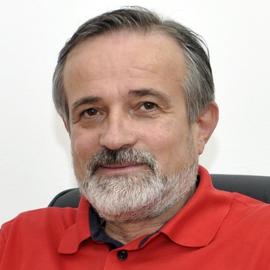
Slavko Vujević
Professor Emeritus
An expert in electrical engineering, particularly known for his contributions to numerical modeling of electromagnetic phenomena, lightning protection, and grounding. Throughout his career, he was a key member of the Faculty of Electrical Engineering, Mechanical Engineering, and Naval Architecture in Split, where he taught, mentored students, and actively participated in scientific research and international professional organizations.

Dino Lovrić
Associate Professor | Department of Theoretical Electrical Engineering and Modelling
Associate professor at the Faculty of Electrical Engineering, Mechanical Engineering and Naval Architecture in Split, with reserch focused on the development of numerical models of grounding systems in various types of soil, particularly in scenarios involving the dissipation of alternating current and transient currents caused by lightning strikes or switching overvoltages, also involved in developing models of dynamic and transient processes in power systems using modern numerical methods.