Comparison of different metal oxide surge arrester models
Abstract
Two methods for modeling metal oxide surge arresters are presented and compared: the surge arrester model proposed by IEEE Working Group 3.4.11 and the simplified surge arrester model proposed by Pinceti and Giannettoni. The comparison of model performances and accuracy is conducted in the program package EMTP–RV. Detailed instructions describing the implementation of both models into EMTP–RV environment are also provided. It is demonstrated that the simplified model proposed by Pinceti and Giannettoni yields highly satisfactory results especially taking into consideration a much easier implementation of that model in the EMTP–RV environment in relation to the IEEE model.
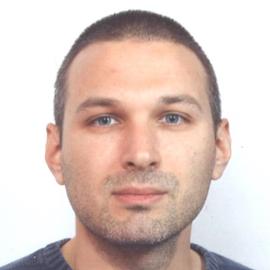
Dino Lovrić
Associate Professor | Department of Theoretical Electrical Engineering and Modelling
Associate professor at the Faculty of Electrical Engineering, Mechanical Engineering and Naval Architecture in Split, with reserch focused on the development of numerical models of grounding systems in various types of soil, particularly in scenarios involving the dissipation of alternating current and transient currents caused by lightning strikes or switching overvoltages, also involved in developing models of dynamic and transient processes in power systems using modern numerical methods.
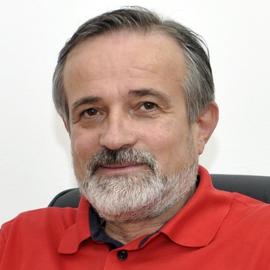
Slavko Vujević
Professor Emeritus
An expert in electrical engineering, particularly known for his contributions to numerical modeling of electromagnetic phenomena, lightning protection, and grounding. Throughout his career, he was a key member of the Faculty of Electrical Engineering, Mechanical Engineering, and Naval Architecture in Split, where he taught, mentored students, and actively participated in scientific research and international professional organizations.

Tonći Modrić
Associate Professor | Department of Electrical Intallations and Systems
Researcher and Full Professor at the Faculty of Electrical Engineering, Mechanical Engineering, and Naval Architecture in Split. His research focus is numerical modeling and calculation of the electric and magnetic fields in power systems and transmission lines, with an emphasis on the development of advanced models for interpreting geoelectrical ground survey data. Additionally, he is involved in the analysis of electromagnetic transients in systems with a high share of renewable energy sources, using finite element techniques.