Optimization of Hydraulic Digital Governor parameters using EMTP-RV
Abstract
Application of hydraulic digital governor is an important step in achieving a fully integrated system for stability studies. In this paper, EMTP-RV model of hydraulic digital governor is used in order to perform optimization of hydraulic digital governor parameters. The simulated transient response characteristics of a digital governor, obtained by the EMTP-RV model, give us much more realistic insight into optimization of hydraulic digital governor parameters such as transient droop time constant (Tr) and temporary droop coefficient (δ). Optimization of essential hydraulic digital governor parameters gives us possibility to improve transient response characteristics of governing system relating to long-term stability of a power system.
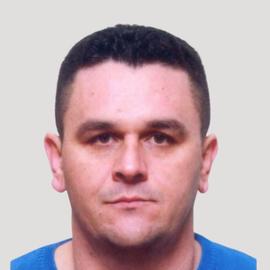
Ivica Jurić-Grgić
Full Professor | Department of Theoretical Electrical Engineering and Modelling
Researcher and full professor at the Faculty of Electrical Engineering, Mechanical Engineering, and Naval Architecture in Split. His research focuses on numerical modeling of electromagnetic transients in power systems, with particular emphasis on the development of advanced numerical methods for analyzing electromagnetic transients in multi-conductor transmission lines. His work includes the application of finite element techniques for transient stability analysis of power systems, as well as the enhancement of models for harmonic and transient analysis of grounding systems.
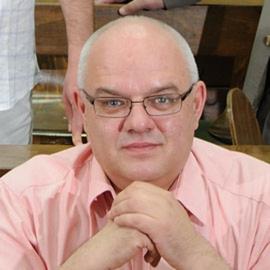
Rino Lucić
Full Professor
Dr. sc. Rino Lucić is a retired professor from the Faculty of Electrical Engineering, Mechanical Engineering, and Naval Architecture in Split. Throughout his career, he taught courses at all study levels and actively participated in the realization of numerous scientific-research projects. As an author or co-author, he has published 41 scientific papers and 16 professional articles, with research interests spanning numerical modeling, transmission lines, finite element method, and power system transient analysis.