Interfacing Harmonic Electromagnetic Models of Grounding Systems With the EMTP-ATP Software Package
Abstract
This paper proposes a methodology for interfacing the frequency-domain harmonic electromagnetic models of complex grounding systems (buried in horizontally stratified multilayer medium) with the EMTP-ATP software package, for the purpose of transient analysis of electrical power systems. It comprises three individual steps: (1) construction of the frequency-dependent nodal admittance matrix for the arbitrarily positioned system of conductors in horizontally stratified multilayer medium, (2) application of the vector fitting technique to this frequency-dependent nodal admittance matrix and (3) construction of the Foster-type networks from the results of the vector fitting and their interfacing with the EMTP-ATP environment. The proposed methodology is general and could be applied to different kinds of grounding systems, ranging from wind turbine grounding systems, to groundings of high voltage transmission line towers and towers carrying GSM base stations.

Petar Sarajčev
Full Professor | Department of Power Grids and Substations
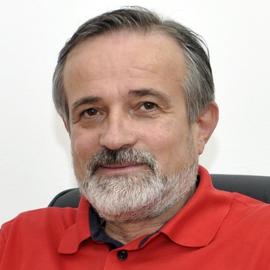
Slavko Vujević
Professor Emeritus
An expert in electrical engineering, particularly known for his contributions to numerical modeling of electromagnetic phenomena, lightning protection, and grounding. Throughout his career, he was a key member of the Faculty of Electrical Engineering, Mechanical Engineering, and Naval Architecture in Split, where he taught, mentored students, and actively participated in scientific research and international professional organizations.
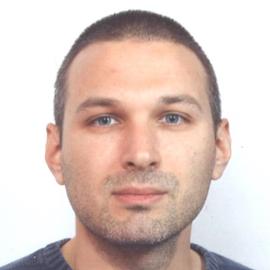
Dino Lovrić
Associate Professor | Department of Theoretical Electrical Engineering and Modelling
Associate professor at the Faculty of Electrical Engineering, Mechanical Engineering and Naval Architecture in Split, with reserch focused on the development of numerical models of grounding systems in various types of soil, particularly in scenarios involving the dissipation of alternating current and transient currents caused by lightning strikes or switching overvoltages, also involved in developing models of dynamic and transient processes in power systems using modern numerical methods.