Abstract
This paper presents a numerical procedure for computation of self and mutual impedance of cylindrical metal plates buried in homogeneous earth. Procedure is based on an analytical expression for scalar potential distribution of an equipotential metal plate in homogeneous unbounded medium. The effect of the air–earth boundary condition is taken into account by the exact imaging method. The robustness and accuracy of the computation procedure is based on the combination of analytical integration and 1D and 2D Gaussian quadratures for solving integrals present in expressions for self and mutual ground impedances of metal plates. The attenuation and phase shift is taken into account approximately by introducing the attenuation-phase shift factor. The numerical procedure developed for the computation of self and mutual ground impedances of cylindrical metal plates buried in homogeneous earth is efficient, numerically stable and generally applicable. Numerical model developed for the computation of self and mutual ground impedances of cylindrical metal plates buried in homogeneous earth represents a basis of a wider numerical model for computation of ground fault current distribution in which grounding grids are approximated by metal cylindrical plates.
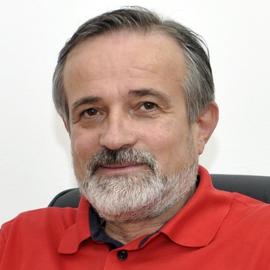
Slavko Vujević
Professor Emeritus
An expert in electrical engineering, particularly known for his contributions to numerical modeling of electromagnetic phenomena, lightning protection, and grounding. Throughout his career, he was a key member of the Faculty of Electrical Engineering, Mechanical Engineering, and Naval Architecture in Split, where he taught, mentored students, and actively participated in scientific research and international professional organizations.
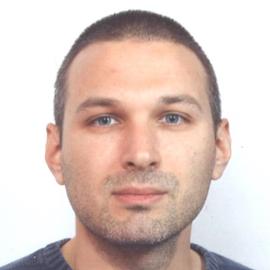
Dino Lovrić
Associate Professor | Department of Theoretical Electrical Engineering and Modelling
Associate professor at the Faculty of Electrical Engineering, Mechanical Engineering and Naval Architecture in Split, with reserch focused on the development of numerical models of grounding systems in various types of soil, particularly in scenarios involving the dissipation of alternating current and transient currents caused by lightning strikes or switching overvoltages, also involved in developing models of dynamic and transient processes in power systems using modern numerical methods.