Abstract
In this paper, a 3D quasi-static numerical algorithm for computation of the magnetic field produced by power lines is presented. These power lines can be overhead power line phase conductors and shield wires or buried cable line phase conductors. The basis of the presented algorithm is the application of Biot-Savart law and the thin-wire approximation of cylindrical conductors. The catenary form of the power line conductors is approximated by a set of straight cylindrical segments. By summing up contributions of all conductor segments, magnetic field distribution is computed. On the basis of the presented theory, a FORTRAN program PFEMF for computation of the magnetic flux density distribution was developed. For each conductor catenary, it is necessary to define only global coordinates of the beginning and ending points and also the value of the longitudinal phase conductor current. Global coordinates of beginning and ending points of each catenary segment are generated automatically in PFEMF. Numerical results obtained by program PFEMF are compared with results obtained by simple 2D model and results obtained using software package CDEGS.

Tonći Modrić
Associate Professor | Department of Electrical Intallations and Systems
Researcher and Full Professor at the Faculty of Electrical Engineering, Mechanical Engineering, and Naval Architecture in Split. His research focus is numerical modeling and calculation of the electric and magnetic fields in power systems and transmission lines, with an emphasis on the development of advanced models for interpreting geoelectrical ground survey data. Additionally, he is involved in the analysis of electromagnetic transients in systems with a high share of renewable energy sources, using finite element techniques.
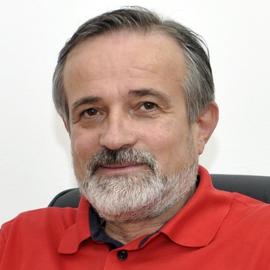
Slavko Vujević
Professor Emeritus
An expert in electrical engineering, particularly known for his contributions to numerical modeling of electromagnetic phenomena, lightning protection, and grounding. Throughout his career, he was a key member of the Faculty of Electrical Engineering, Mechanical Engineering, and Naval Architecture in Split, where he taught, mentored students, and actively participated in scientific research and international professional organizations.
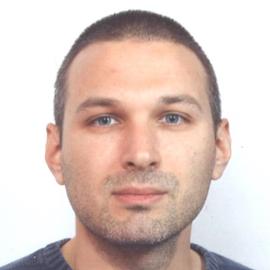
Dino Lovrić
Associate Professor | Department of Theoretical Electrical Engineering and Modelling
Associate professor at the Faculty of Electrical Engineering, Mechanical Engineering and Naval Architecture in Split, with reserch focused on the development of numerical models of grounding systems in various types of soil, particularly in scenarios involving the dissipation of alternating current and transient currents caused by lightning strikes or switching overvoltages, also involved in developing models of dynamic and transient processes in power systems using modern numerical methods.