Abstract
Numerical models for computing low-frequency electromagnetic fields can contain spatial 2D finite elements, which are numerically most demanding due to problem of singularity. In this paper, an advanced time-harmonic quasistatic surface charge simulation method for computation of scalar electric potential and electric field intensity distribution is presented. Subparametric spatial 2D finite elements with an arbitrary number of nodes for description of surface charge density distribution are developed. The problem of singularity that occurs in the double 2D integration over these elements is solved using an originally developed advanced numerical integration based on 2D Gaussian quadrature. Self and mutual coefficients of spatial 2D finite element nodes are numerically computed and included in the system of linear equations for surface charge density distribution computation. The accuracy of the computer program, based on the presented model, is shown in the chosen numerical example with known analytical solution. Numerical model and advanced integration presented herein could be easily extended to non-homogeneous regions and multilayer problems using the image method.

Tonći Modrić
Associate Professor | Department of Electrical Intallations and Systems
Researcher and Full Professor at the Faculty of Electrical Engineering, Mechanical Engineering, and Naval Architecture in Split. His research focus is numerical modeling and calculation of the electric and magnetic fields in power systems and transmission lines, with an emphasis on the development of advanced models for interpreting geoelectrical ground survey data. Additionally, he is involved in the analysis of electromagnetic transients in systems with a high share of renewable energy sources, using finite element techniques.
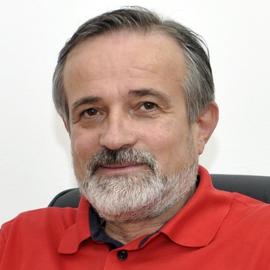
Slavko Vujević
Professor Emeritus
An expert in electrical engineering, particularly known for his contributions to numerical modeling of electromagnetic phenomena, lightning protection, and grounding. Throughout his career, he was a key member of the Faculty of Electrical Engineering, Mechanical Engineering, and Naval Architecture in Split, where he taught, mentored students, and actively participated in scientific research and international professional organizations.
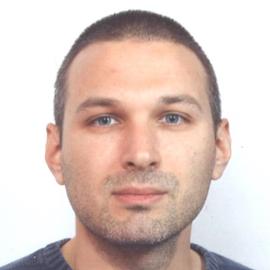
Dino Lovrić
Associate Professor | Department of Theoretical Electrical Engineering and Modelling
Associate professor at the Faculty of Electrical Engineering, Mechanical Engineering and Naval Architecture in Split, with reserch focused on the development of numerical models of grounding systems in various types of soil, particularly in scenarios involving the dissipation of alternating current and transient currents caused by lightning strikes or switching overvoltages, also involved in developing models of dynamic and transient processes in power systems using modern numerical methods.