Abstract
Numerical artifacts affect the reliability of computational dosimetry of human exposure to low- frequency electromagnetic fields. In the guidelines of the International Commission of Non-Ionizing Radiation Protection (ICNIRP), a reduction factor of 3 was considered to take into account numerical uncertainties when determining the limit values for human exposure. However, the rationale for this value is unsure. The IEEE International Committee on Electromagnetic Safety has published a research agenda to resolve numerical uncertainties in low- frequency dosimetry. For this purpose, intercomparison of results computed using different methods by different research groups is important. In previous intercomparison studies for low- frequency exposures, only a few computational methods were used, and the computational scenario was limited to a uniform magnetic field exposure. This study presents an application of various numerical techniques used: different Finite Element Method (FEM) schemes, Method of Moments (MoM) and Boundary Element Method (BEM) variants and finally by using a hybrid FEM/BEM approach. As a computational example, the induced electric field in the brain by the coil used in transcranial magnetic stimulation is investigated. Intercomparison of the computational results are presented qualitatively. Some remarks are given for the effectiveness and limitations of application of the various computational methods.
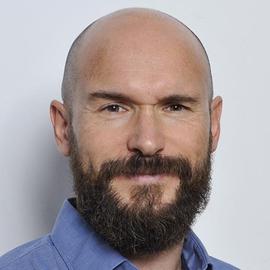
Mario Cvetković
Associate Professor | Department of Electrical Engineering Fundamentals
Associate professor at FESB in Split, with a research focus on numerical modeling including finite element and moment methods, computational bioelectromagnetics and heat transfer related phenomena. He is involved in IEEE’s ICES Technical Committee 95, various international projects and is committed to advancing both knowledge and practical applications in electromagnetic safety and biomedical engineering.