Speed-sensorless vector control of an induction generator including stray load and iron losses and online parameter tuning
Abstract
Field-oriented control (FOC) is standardly used in high-performance induction machine (IM) applications. However, the performance of FOC algorithms strongly depends on the level of agreement between the actual IM and the respective model used for the algorithm design. IM parameters’ values are known to vary with the operating conditions, so their online identification is preferable. In addition, it is often preferred to acquire the rotor speed by estimation because speed sensors increase the cost and size of the system while reducing its reliability. Model-reference-adaptive- system (MRAS) estimators are popular due to their simple implementation, but they are sensitive to IM parameters and, hence, usually include a parameter tuning mechanism. This paper proposes an indirect rotor- field- oriented controller with the parallel MRAS speed estimation and IM parameter tuning – implemented in an induction generator system. Both the control algorithm and the MRAS include the stray load and iron losses, magnetic saturation, and rotor resistance variation, whereas the MRAS additionally accounts for variations of the stator and stray-load resistances. The system performance is experimentally evaluated over wide ranges of the IM flux, speed, torque, and temperature.

Mateo Bašić
Full Professor | Department of Power Electronics and Control
Full professor at the Faculty of Electrical Engineering, Mechanical Engineering and Naval Architecture in Split, with recent research interests related to the fields of power electronics and renewable energy sources, with a special focus on energy-efficient control of inverters, battery systems, wind turbines, photovoltaic sources and self-excited induction generators in microgrids - both in island operation and in grid-tie operation.
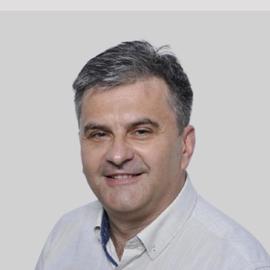
Dinko Vukadinović
Full Professor | Department of Power Electronics and Control
Full professor at the Faculty of Electrical Engineering, Mechanical Engineering, and Naval Architecture in Split, specialized in modern control systems for power electronic converters, electric motors, and generators. At the Power Electronics Research Laboratory, he leads experimental projects and develops advanced methods for regulating electrical machines and converters, while supervising doctoral research in these areas.
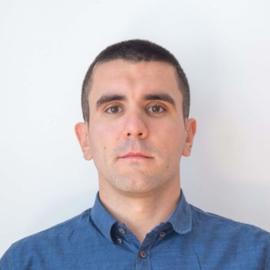
Ivan Grgić
Assistant Professor | Department of Power Electronics and Control
Assistant professor at the Faculty of Electrical Engineering, Mechanical Engineering and Architecture in Split, specialized in the research of power electronic converters in photovoltaic systems and microgrids. Currently, he teaches courses in the areas of control engineering, digital electronics, electrical engineering, electrical machines and transformers.