Efficiency Boost of a Quasi-Z-Source Inverter: A Novel Shoot-Through Injection Method with Dead-Time
Abstract
A quasi-Z-source inverter (qZSI) is a single- stage inverter that enables a boost of the input dc voltage through the utilization of a so-called shoot-through state (STS). Generally, the efficiency of the qZSI depends on the utilized STS injection method to a significant extent. This paper presents a novel method of STS injection, called the zero-sync method, in which the STS occurrence is synchronized with the beginning of the zero switching states (ZSSs) of the three-phase sinusoidal pulse width modulation (SPWM). In this way, compared to the conventional STS injection method, the total number of switchings per transistor is reduced. The ZSSs are detected by utilizing the SPWM pulses and the logic OR gates. The desired duration of the STS is implemented by utilizing the LM555CN timer. The laboratory setup of the three-phase qZSI in the stand-alone operation mode was built to compare the proposed zero-sync method with the conventional STS injection method. The comparison was carried out for different values of the switching frequency, input voltage, duty ratio, and load power. As a result of the implementation of the zero-sync method, the qZSI efficiency was increased by up to 4%. In addition, the unintended STSs, caused by the non-ideal switching dynamics of the involved transistors, were successfully eliminated by introducing the optimal dead-time as part of the modified zero-sync method. As a result, the efficiency was increased by up to 12% with regard to the conventional method.
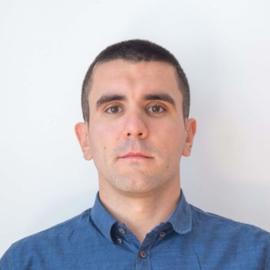
Ivan Grgić
Assistant Professor | Department of Power Electronics and Control
Assistant professor at the Faculty of Electrical Engineering, Mechanical Engineering and Architecture in Split, specialized in the research of power electronic converters in photovoltaic systems and microgrids. Currently, he teaches courses in the areas of control engineering, digital electronics, electrical engineering, electrical machines and transformers.
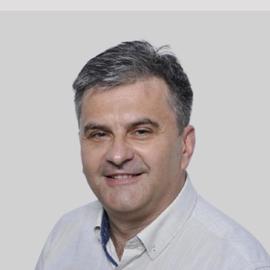
Dinko Vukadinović
Full Professor | Department of Power Electronics and Control
Full professor at the Faculty of Electrical Engineering, Mechanical Engineering, and Naval Architecture in Split, specialized in modern control systems for power electronic converters, electric motors, and generators. At the Power Electronics Research Laboratory, he leads experimental projects and develops advanced methods for regulating electrical machines and converters, while supervising doctoral research in these areas.
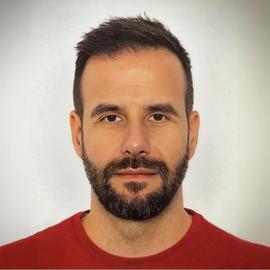
Mateo Bašić
Full Professor | Department of Power Electronics and Control
Full professor at the Faculty of Electrical Engineering, Mechanical Engineering and Naval Architecture in Split, with recent research interests related to the fields of power electronics and renewable energy sources, with a special focus on energy-efficient control of inverters, battery systems, wind turbines, photovoltaic sources and self-excited induction generators in microgrids - both in island operation and in grid-tie operation.