Abstract
The power cables laying in the urban areas require utilization of the protective ducts, mainly to facilitate the faulty section replacement. However, the use of cable ducts results in reduced capacity to dissipate generated heat to the surroundings. Thus, the thermal analysis of cables placed in ducts is very important for proper power cable operation. The thermal response of cables laid in mutual and in separate ducts, respectively, is considered at two values of current load. The full-scale field measurement setup is utilized to carry out the analysis of both steady- state and dynamic power cable heating under actual field conditions for the two backfill configurations. The measurement results provide the insight into the power cable heating dynamics related to the situations of a short-term over- loads and fault drive- through responses and also the opportunity to verify the proposed numerical approach based on the use of finite element method and the boundary conditions on the interior duct surface. The approach could be considered as a compromise between the standardized procedure and the tedious procedure involving the computational fluid dynamics simulations due to straightforward implementation and very good accuracy. The results obtained suggest that cables laid in mutual duct lead to a less favourable thermal situation when compared to cables laid in separate ducts. Also, the numerical results suggest that the use of non- uniform heat flux around the inner duct surface results in a significantly better agreement with measurements, compared to the purely numerical approach utilising the concept of the effective thermal conductivity to model heat transfer in the air gap between cable and duct.
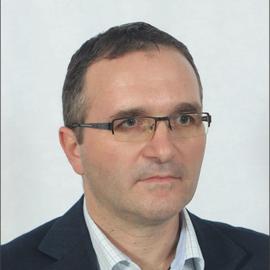
Goran Petrović
Full Professor | Department of Electrical Measurements
Prof. dr. sc. Goran Petrović is a full professor at the Faculty of Electrical Engineering, Mechanical Engineering and Architecture in Split. His research interests include measurement of electrical and process quantities, analysis of geoelectrical and geothermal features of the soil, instrumentation for smart grids, measurement and application of synchrophasors. He is the author of numerous papers published in top-tier scientific journals and contributed to valuable international and national scientific projects.
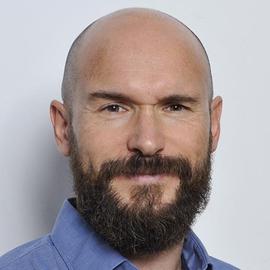
Mario Cvetković
Associate Professor | Department of Electrical Engineering Fundamentals
Associate professor at FESB in Split, with a research focus on numerical modeling including finite element and moment methods, computational bioelectromagnetics and heat transfer related phenomena. He is involved in IEEE’s ICES Technical Committee 95, various international projects and is committed to advancing both knowledge and practical applications in electromagnetic safety and biomedical engineering.

Tonko Garma
Full Professor | Department of Electrical Measurements
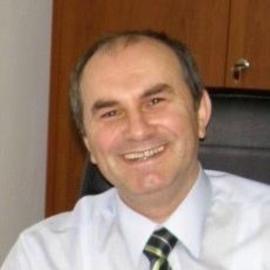
Tomislav Kilić
Full Professor | Department of Electrical Measurements
Full professor at the at the Faculty of Electrical Engineering, Mechanical Engineering and Naval Architecture in Split, with professional reserch focus on power quality, signal analysis in electrical power systems, and measurement of process variables, alongside a significant role in the academic and administrative life of the University of Split.