Numerical analysis of eddy currents in the end region of a turbogenerator
Abstract
This paper is an attempt to examine the complex electromagnetic conditions in the front part of a turbogenerator. The Helmholtz equation of the vector magnetic potential was used, with which a numerical model of a nonlinear quasi-stationary 2D field was set up using the finite element method. The anisotropic structure of the magnetic material was taken into account. The developed model successfully solves the problem of the relationship between the prescribed boundary conditions and eddy currents. The nonlinear system of equations was solved using the direct iteration method and the Newton-Raphson method, with the frontal technique of solving the global system of equations being used in each iterative cycle. In Chapter 2, a numerical model of a linear quasi-stationary field with respect to the boundary conditions was set up. Their influence on the eddy current field image was presented and an answer was given for the choice of a variant of the mathematical model for solving. In Chapter 3, a numerical model of a 2D linear quasi-stationary field was set up using the finite element method, based on the mathematical model from Chapter 2. In chapter 4, a numerical model of a 2D nonlinear quasi-stationary field is set up using the finite element method, which takes into account the anisotropic structure of the magnetic material. In chapter 5, the flowchart is described and test examples are made to show the correct functioning of the set algorithm. In chapter 6, based on the aforementioned numerical model of the nonlinear field, the image of the field of the 2D model of the frontal space of the turbogenerator was resolved and the obtained results were analyzed. For this purpose, a special program was created for the graphic display of magnetic induction lines, which significantly reduced the efforts in the clear display of calculation results.
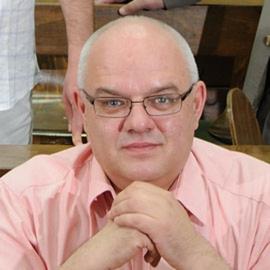
Rino Lucić
Full Professor
Dr. sc. Rino Lucić is a retired professor from the Faculty of Electrical Engineering, Mechanical Engineering, and Naval Architecture in Split. Throughout his career, he taught courses at all study levels and actively participated in the realization of numerous scientific-research projects. As an author or co-author, he has published 41 scientific papers and 16 professional articles, with research interests spanning numerical modeling, transmission lines, finite element method, and power system transient analysis.