Transient electromagnetic model of grounding system in horizontally stratified multilayer medium
Abstract
In this doctoral thesis, a transient electromagnetic model for the analysis of a grounding system in a horizontally stacked multilayer medium has been developed. The basis of the developed model is a harmonic electromagnetic model based on the application of the finite element technique to the integral formulation of the problem in the frequency domain, with a thin-wire approximation of the conductor segments of the grounding system. Each conductor is divided into segments, and all electromagnetically coupled segments form one finite element. The longitudinal currents of the conductor segments change linearly along the segments, and the segments discharge the transverse current uniformly into the surrounding medium. The self and mutual impedances of the conductor segments have been calculated using the mean potential method. It is possible to include bare cylindrical and rectangular conductors of the grounding system and metal screens of single-core and three-core power cables in the calculation. By using the damping-phase factor, the time-consuming and complex solution of Sommerfeld integrals has been avoided, and despite this, very high accuracy has been achieved. For the transition between the time and frequency domains, a highly accurate, fast and robust continuous numerical Fourier transform was originally developed, which is characterized by arbitrary and mutually independent sampling in the time and frequency domains. Thanks to this fact, it is possible to take into account the soil ionization very accurately, despite the fact that the main calculation is carried out in the frequency domain. The accuracy of the developed transient electromagnetic model for the analysis of the grounding system in a horizontally arranged multilayer medium is confirmed by comparing the calculation results with experimental and numerical results available in the literature.
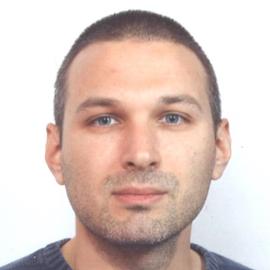
Dino Lovrić
Associate Professor | Department of Theoretical Electrical Engineering and Modelling
Associate professor at the Faculty of Electrical Engineering, Mechanical Engineering and Naval Architecture in Split, with reserch focused on the development of numerical models of grounding systems in various types of soil, particularly in scenarios involving the dissipation of alternating current and transient currents caused by lightning strikes or switching overvoltages, also involved in developing models of dynamic and transient processes in power systems using modern numerical methods.