A critical review of active lightning protection ait terminals effectiveness
Abstract
Recently, around the world, there has been increasing pressure from manufacturers and sellers of non-classical (active) lightning protection systems to have their systems widely used. These are, first of all, CTS systems whose operating principle is based on preventing lightning from occurring and ESE systems whose operating principle is a preliminary upward discharge. These systems, especially the ESE system, are increasingly being offered on the domestic market, and when advertising their features, it is emphasized that they are superior to the classic Franklin lightning protection system. The paper briefly describes the features of each system and concludes that there is no experimental evidence that active lightning rods are more effective than the classic Franklin rod lightning rod of the same height. The problem of replacing radioactive lightning rods is also discussed.
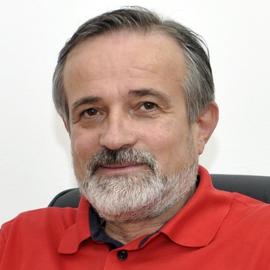
Slavko Vujević
Professor Emeritus
An expert in electrical engineering, particularly known for his contributions to numerical modeling of electromagnetic phenomena, lightning protection, and grounding. Throughout his career, he was a key member of the Faculty of Electrical Engineering, Mechanical Engineering, and Naval Architecture in Split, where he taught, mentored students, and actively participated in scientific research and international professional organizations.

Rino Lucić
Full Professor
Dr. sc. Rino Lucić is a retired professor from the Faculty of Electrical Engineering, Mechanical Engineering, and Naval Architecture in Split. Throughout his career, he taught courses at all study levels and actively participated in the realization of numerous scientific-research projects. As an author or co-author, he has published 41 scientific papers and 16 professional articles, with research interests spanning numerical modeling, transmission lines, finite element method, and power system transient analysis.