Analysis of overvoltage protection efficiency of low-voltage overhead power lines with self-supporting cable bunch
Abstract
The issue of protecting low-voltage networks from the harmful effects of atmospheric overvoltages is very poorly represented in domestic and foreign professional literature. The system of overvoltage protection in low-voltage networks of the Republic of Croatia is diverse, and almost every distribution area treats this problem at its own discretion. Therefore, we believe that this problem needs to be approached systematically. This paper lists the most important international and Croatian standards that address the issue of selecting the characteristics and installation locations of metal oxide surge arresters in low-voltage networks. For a selected example of an overhead low-voltage line constructed with a self-supporting cable bundle, the propagation of the shock wave along the low-voltage line in the event of a direct lightning strike to a medium-voltage line was analyzed using the ATP-EMTP computer program for transient analysis. Based on this, conclusions and recommendations were drawn for the method of installing metal oxide surge arresters in low-voltage networks, taking into account the techno-economic justification of their installation.
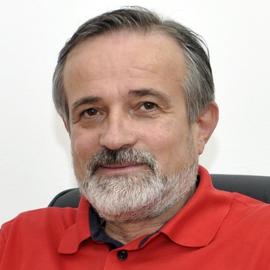
Slavko Vujević
Professor Emeritus
An expert in electrical engineering, particularly known for his contributions to numerical modeling of electromagnetic phenomena, lightning protection, and grounding. Throughout his career, he was a key member of the Faculty of Electrical Engineering, Mechanical Engineering, and Naval Architecture in Split, where he taught, mentored students, and actively participated in scientific research and international professional organizations.
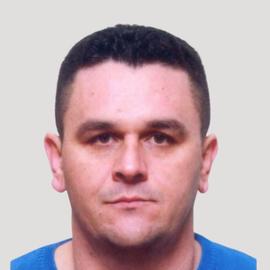
Ivica Jurić-Grgić
Full Professor | Department of Theoretical Electrical Engineering and Modelling
Researcher and full professor at the Faculty of Electrical Engineering, Mechanical Engineering, and Naval Architecture in Split. His research focuses on numerical modeling of electromagnetic transients in power systems, with particular emphasis on the development of advanced numerical methods for analyzing electromagnetic transients in multi-conductor transmission lines. His work includes the application of finite element techniques for transient stability analysis of power systems, as well as the enhancement of models for harmonic and transient analysis of grounding systems.