Advanced algorithms for analysis of electromagnetic fields of power lines and substations
Abstract
The calculation of low-frequency electromagnetic fields in the vicinity of power lines and facilities is important during their planning, design and construction. Due to the possible harmful effects on human health, special laws and regulations have prescribed limit values of fields that must not be exceeded, and measurement procedures have been defined with regard to the exposure of the general population and the exposure of workers in the area of workplaces near sources of low-frequency electromagnetic fields. There are various numerical models and ready-made software packages that are used to calculate the electromagnetic fields of power lines and facilities, based on the system of Maxwell’s equations. This paper will present an algorithm that uses the finite element technique to calculate low-frequency electric and magnetic fields. The segments of cylindrical conductors of a power line satisfy the thin-wire approximation, and the charge density of an individual conductor is approximated by a constant. An example has been selected on which the results of measuring the electric and magnetic fields below 400 kV power lines will be compared with the numerical results obtained by the described algorithm.

Tonći Modrić
Associate Professor | Department of Electrical Intallations and Systems
Researcher and Full Professor at the Faculty of Electrical Engineering, Mechanical Engineering, and Naval Architecture in Split. His research focus is numerical modeling and calculation of the electric and magnetic fields in power systems and transmission lines, with an emphasis on the development of advanced models for interpreting geoelectrical ground survey data. Additionally, he is involved in the analysis of electromagnetic transients in systems with a high share of renewable energy sources, using finite element techniques.
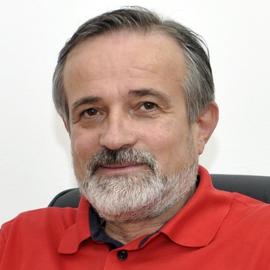
Slavko Vujević
Professor Emeritus
An expert in electrical engineering, particularly known for his contributions to numerical modeling of electromagnetic phenomena, lightning protection, and grounding. Throughout his career, he was a key member of the Faculty of Electrical Engineering, Mechanical Engineering, and Naval Architecture in Split, where he taught, mentored students, and actively participated in scientific research and international professional organizations.
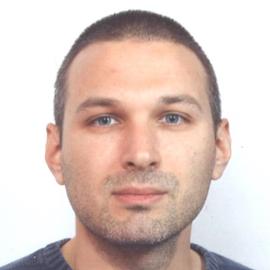
Dino Lovrić
Associate Professor | Department of Theoretical Electrical Engineering and Modelling
Associate professor at the Faculty of Electrical Engineering, Mechanical Engineering and Naval Architecture in Split, with reserch focused on the development of numerical models of grounding systems in various types of soil, particularly in scenarios involving the dissipation of alternating current and transient currents caused by lightning strikes or switching overvoltages, also involved in developing models of dynamic and transient processes in power systems using modern numerical methods.