Advanced numerical modelling of grounding systems in multilayer medium
Abstract
The paper briefly describes the originally developed harmonic electromagnetic model and the transient electromagnetic model of the grounding system in a horizontally stacked multilayer medium. These two models are connected by the originally developed algorithms for the continuous numerical Fourier transform (CNFT) and the inverse continuous numerical Fourier transform (ICNFT). In the electromagnetic models, the grounding system conductors are divided into thin-wire rectilinear segments. Bare cylindrical conductors, bare rectangular conductors, as well as metal screens of single-core and three-core cables can be taken into account. The complete electromagnetic coupling between the segments of the grounding system conductors is taken into account. The use of numerically demanding Sommerfeld integrals is avoided by introducing a damping-phase factor, which effectively approximates the damping and phase rotation of the electromagnetic wave. An individual segment of the grounding system conductor can be located in the air or in one of the layers of a horizontally stacked multilayer soil, and the total number of soil layers is arbitrary. The influence of soil heterogeneity is taken into account using a robust and highly accurate originally developed fixed image method. Using the developed electromagnetic models of the grounding system, the distributions of: scalar electric potential, vector magnetic potential, magnetic induction and electric field strength can be calculated. Thanks to the use of the damping-phase factor and the fixed image method, the developed electromagnetic models provide results with a high degree of accuracy in a relatively short computational time.
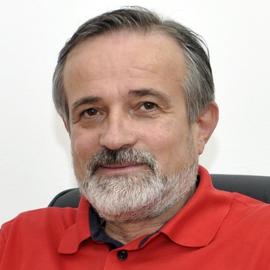
Slavko Vujević
Professor Emeritus
An expert in electrical engineering, particularly known for his contributions to numerical modeling of electromagnetic phenomena, lightning protection, and grounding. Throughout his career, he was a key member of the Faculty of Electrical Engineering, Mechanical Engineering, and Naval Architecture in Split, where he taught, mentored students, and actively participated in scientific research and international professional organizations.
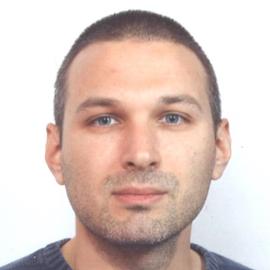
Dino Lovrić
Associate Professor | Department of Theoretical Electrical Engineering and Modelling
Associate professor at the Faculty of Electrical Engineering, Mechanical Engineering and Naval Architecture in Split, with reserch focused on the development of numerical models of grounding systems in various types of soil, particularly in scenarios involving the dissipation of alternating current and transient currents caused by lightning strikes or switching overvoltages, also involved in developing models of dynamic and transient processes in power systems using modern numerical methods.