Stochastic-Deterministic Boundary Integral Method for Transcranial Electric Stimulation: A Cylindrical Head Representation
Abstract
In this paper the boundary integral method (BIM) is applied to modelling of the transcranial electric stimulation which is a novel approach in comparison to usually used finite element method (FEM) based solvers. The formulation of the problem is based on a quasi- static approximation of the currents and voltages induced in living tissues. A cylindrical canonical geometry is chosen as a simple representation of the head. Another novelty introduced in this work is taking into account for the possible variations in the model input parameters. The shape and the position of electrodes, as well as the shape of the head are considered as random variables distributed in the specific range. By means of stochastic collocation method (SCM), the uncertainty is propagated to the output values of interest. Accordingly, stochastic moments are computed and sensitivity analysis is carried out. The results obtained in this simple test case may serve as the first step for a rigorous, anatomically based BDIM+SCM model of the realistic head which is important for the validation of the results obtained from other more sophisticated, mostly FEM based head models.
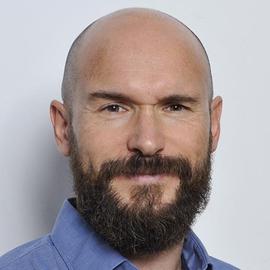
Mario Cvetković
Associate Professor | Department of Electrical Engineering Fundamentals
Associate professor at FESB in Split, with a research focus on numerical modeling including finite element and moment methods, computational bioelectromagnetics and heat transfer related phenomena. He is involved in IEEE’s ICES Technical Committee 95, various international projects and is committed to advancing both knowledge and practical applications in electromagnetic safety and biomedical engineering.