Fixed‐Duty‐Cycle Control of a Quasi‐Z‐Source Inverter in a Battery‐Assisted Photovoltaic System
Abstract
This paper presents two simple control strategies for a battery-assisted photovoltaic (PV) system with the threephase quasi-Z-source inverter (qZSI). The specific control objectives depend on the operating mode of the PV-qZSI system. In the stand-alone mode, the objective is to keep the fundamental RMS value of the ac-side phase voltage at a desired value, whereas in the grid-tied mode, the objectives are to synchronize the qZSI with the grid and achieve unity power factor. The additional common objective is to operate the PV system close to the maximum power point (MPP). This can be achieved in an open-loop manner by assigning a fixed shoot-through duty ratio, thus avoiding any additional sensors, but the inherent drawback of this method is sensitivity to irradiance and temperature variations leading to suboptimal performance. The proposed control strategies were experimentally tested over a reasonably wide range of irradiance levels in order to assess the overall performance of the PV-qZSI system.
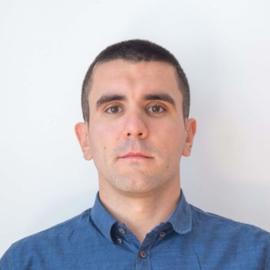
Ivan Grgić
Assistant Professor | Department of Power Electronics and Control
Assistant professor at the Faculty of Electrical Engineering, Mechanical Engineering and Architecture in Split, specialized in the research of power electronic converters in photovoltaic systems and microgrids. Currently, he teaches courses in the areas of control engineering, digital electronics, electrical engineering, electrical machines and transformers.
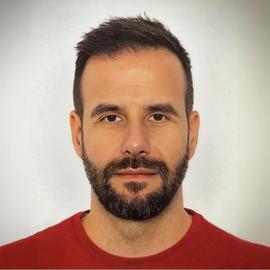
Mateo Bašić
Full Professor | Department of Power Electronics and Control
Full professor at the Faculty of Electrical Engineering, Mechanical Engineering and Naval Architecture in Split, with recent research interests related to the fields of power electronics and renewable energy sources, with a special focus on energy-efficient control of inverters, battery systems, wind turbines, photovoltaic sources and self-excited induction generators in microgrids - both in island operation and in grid-tie operation.
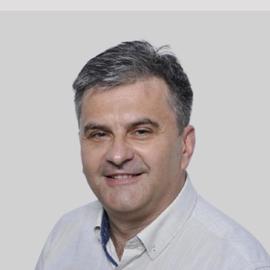
Dinko Vukadinović
Full Professor | Department of Power Electronics and Control
Full professor at the Faculty of Electrical Engineering, Mechanical Engineering, and Naval Architecture in Split, specialized in modern control systems for power electronic converters, electric motors, and generators. At the Power Electronics Research Laboratory, he leads experimental projects and develops advanced methods for regulating electrical machines and converters, while supervising doctoral research in these areas.