Non-iterative algorithm for computation of the prospective permissible touch voltage
Abstract
The permissible supply voltage for touch depending on the fault duration according to the HRN EN 50522 standard was calculated iteratively. The values of the permissible current through the human body depending on the fault duration are given in the table, read from the curve given in the HRN IEC/TS 60479-1 standard. The table values of the total impedance of the human body depending on the voltage on the human body for the current path between the hands are also taken from the HRN IEC/TS 60479-1 standard. In the HRN EN 50522 standard, the permissible voltage on the human body depending on the current through the human body for the selected current path was iteratively calculated from the given data. After that, for the selected fault duration, taking into account additional resistances, the weighted value of the permissible supply voltage for touch was iteratively calculated, where the weighted average values of the permissible supply voltage for touch were calculated for four different current paths. For each individual current path, the corresponding cardiac current factor and the corresponding correction factor for the total impedance of the human body are taken into account. For the selected fault duration, the amount of the permissible supply voltage for touch can be read from the curves given in the HRN EN 50522 standard. This paper describes an originally developed non-iterative algorithm for calculating the permissible supply voltage for touch. We avoided the iterative procedure by obtaining a curve describing the dependence of the permissible voltage on the human body on the current through the human body from the tabulated values of the total impedance of the human body in relation to the voltage on the human body for the current path between the hands, using Hermite’s cubic interpolation. For the selected fault duration, taking into account additional resistances, the weighted value of the permissible supply voltage for touch is calculated non-iteratively. For each individual current path, the corresponding cardiac current factor and the corresponding correction factor for the total impedance of the human body are taken into account. Apart from these factors and additional resistances, for the non-iterative calculation of the permissible supply voltage for touch, only the tabulated sample values are used: the permissible voltage on the human body, the permissible current through the human body and their derivatives with respect to the fault duration. Using these sample values, using Hermite’s cubic interpolation, the permissible voltage on the human body and the permissible current through the human body can be easily calculated for any fault duration.
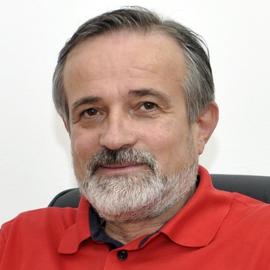
Slavko Vujević
Professor Emeritus
An expert in electrical engineering, particularly known for his contributions to numerical modeling of electromagnetic phenomena, lightning protection, and grounding. Throughout his career, he was a key member of the Faculty of Electrical Engineering, Mechanical Engineering, and Naval Architecture in Split, where he taught, mentored students, and actively participated in scientific research and international professional organizations.

Tonći Modrić
Associate Professor | Department of Electrical Intallations and Systems
Researcher and Full Professor at the Faculty of Electrical Engineering, Mechanical Engineering, and Naval Architecture in Split. His research focus is numerical modeling and calculation of the electric and magnetic fields in power systems and transmission lines, with an emphasis on the development of advanced models for interpreting geoelectrical ground survey data. Additionally, he is involved in the analysis of electromagnetic transients in systems with a high share of renewable energy sources, using finite element techniques.
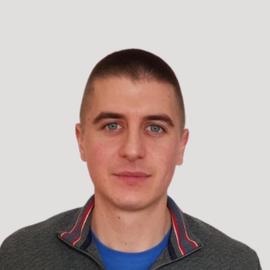
Ivan Krolo
Assistant Professor | Department of Theoretical Electrical Engineering and Modelling
Researcher and assistant professor at the Faculty of Electrical Engineering, Mechanical Engineering, and Naval Architecture in Split, with research focus on the development of numerical models for grounding systems and issues related to electrical safety in low-voltage and high-voltage systems.