Optimization of a Hedge-Algebra-Based Speed Controller in a Stand-Alone WECS
Abstract
This paper deals with a variable-speed wind energy conversion system (WECS), which is designed for dc load supply and battery charging in stand-alone applications.The PI speed controller, which is typically used in vector control systems with a self-excited induction generator (SEIG), is here replaced with a hedge-algebra controller (HAC). With this type of controller, it is possible to achieve a faster response and reduced overshoot/undershoot in the wind turbine (WT) speed in comparison with the PI controller. Fuzziness parameters and the linguistic rule base of the HAC are obtained by applying a genetic-algorithm-based optimization, which implies minimization of a predefined performance index. In this paper, the integral absolute error of the SEIG rotor speed is selected as the performance index, with the maximum overshoot/undershoot in the rotor speed during transients limited to 5%. The HAC is here for the first time implemented as the speed controller of the WT-driven SEIG. Simulation results show fast rotor speed responses obtained with the optimized HAC, which are superior to the PI controller responses.
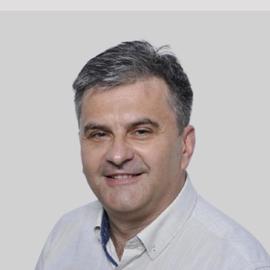
Dinko Vukadinović
Full Professor | Department of Power Electronics and Control
Full professor at the Faculty of Electrical Engineering, Mechanical Engineering, and Naval Architecture in Split, specialized in modern control systems for power electronic converters, electric motors, and generators. At the Power Electronics Research Laboratory, he leads experimental projects and develops advanced methods for regulating electrical machines and converters, while supervising doctoral research in these areas.
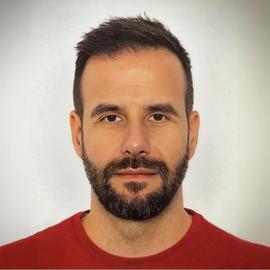
Mateo Bašić
Full Professor | Department of Power Electronics and Control
Full professor at the Faculty of Electrical Engineering, Mechanical Engineering and Naval Architecture in Split, with recent research interests related to the fields of power electronics and renewable energy sources, with a special focus on energy-efficient control of inverters, battery systems, wind turbines, photovoltaic sources and self-excited induction generators in microgrids - both in island operation and in grid-tie operation.