Power Losses Analysis of a Three-phase Quasi-Z- Source Inverter
Abstract
This paper presents the power losses analysis of a three-phase quasi-Z-source inverter. The analysis is based on experimental measurements. For that purpose, the laboratory setup of the considered inverter operating in a stand-alone mode was built. The total inverter power losses have been obtained as a difference between the measured input and output powers of the inverter. The power losses of the inductors in the impedance network were determined based on the measured respective currents and parasitic resistances, switching frequency, and available inductor core data. On the other hand, the power losses of the capacitors in the impedance network were neglected due to low equivalent series resistance of the utilized polypropylene capacitors. The remaining losses were ascribed to semiconductor losses. Following these assumptions, the power losses distribution and the efficiency of the considered inverter were determined over wide ranges of switching frequency, input voltage, shoot-through duty cycle, and phase current RMS value.
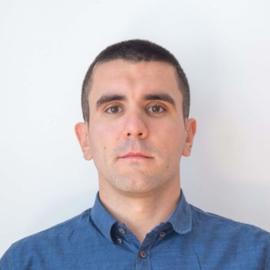
Ivan Grgić
Assistant Professor | Department of Power Electronics and Control
Assistant professor at the Faculty of Electrical Engineering, Mechanical Engineering and Architecture in Split, specialized in the research of power electronic converters in photovoltaic systems and microgrids. Currently, he teaches courses in the areas of control engineering, digital electronics, electrical engineering, electrical machines and transformers.
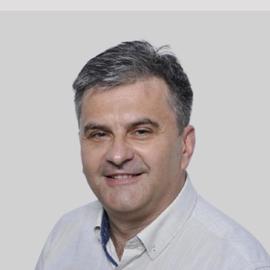
Dinko Vukadinović
Full Professor | Department of Power Electronics and Control
Full professor at the Faculty of Electrical Engineering, Mechanical Engineering, and Naval Architecture in Split, specialized in modern control systems for power electronic converters, electric motors, and generators. At the Power Electronics Research Laboratory, he leads experimental projects and develops advanced methods for regulating electrical machines and converters, while supervising doctoral research in these areas.
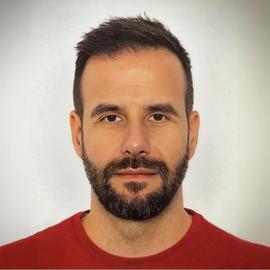
Mateo Bašić
Full Professor | Department of Power Electronics and Control
Full professor at the Faculty of Electrical Engineering, Mechanical Engineering and Naval Architecture in Split, with recent research interests related to the fields of power electronics and renewable energy sources, with a special focus on energy-efficient control of inverters, battery systems, wind turbines, photovoltaic sources and self-excited induction generators in microgrids - both in island operation and in grid-tie operation.