Abstract
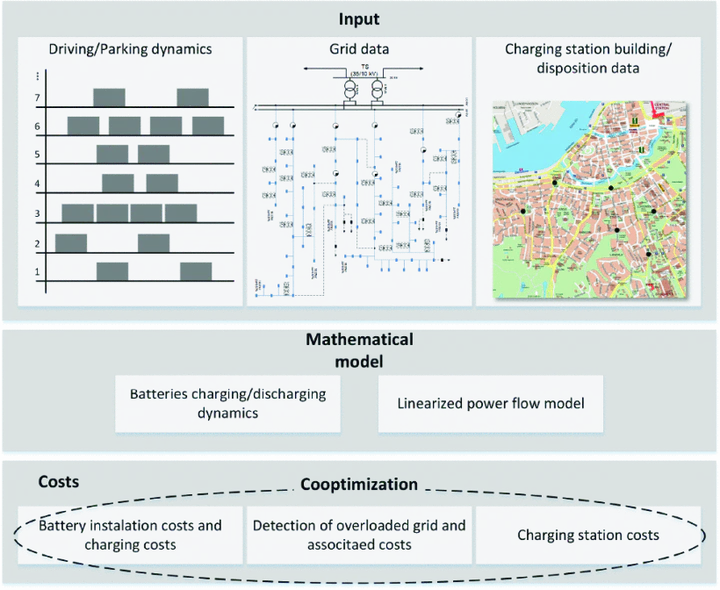
In this paper, a comprehensive optimization model for decision support on public transportation system electrification is given. The basic assumption is that the transition is being governed centrally. This assumption together with a rather deterministic nature of the public transportation compared to a private enables a holistic approach in transition towards a fully electric system. The model comprises the following components: the electrification of the buses, the building of the charging stations and the electric grid reinforcement. These investment components are combined with the planned operating costs related to the cost of the energy used for charging and together yield a holistic model for transition planning.

Josip Vasilj
Associate Professor | Department of Power Grids and Substations
Researcher and Associate Professor at the Faculty of Electrical Engineering, Mechanical Engineering, and Naval Architecture in Split, where he teaches courses related to engineering economics, power system analysis, power grids and machine learning. His research focus is the application of advanced numerical methods to problems in the analysis and planning of power system operations.

Damir Jakus
Full Professor | Department of Power Grids and Substations
Researcher and a full professor at the Faculty of Electrical Engineering, Mechanical Engineering and Naval Architecture in Split. His research interests include power system optimization and planning, RES integration, electricity market modeling.