The Beginning of the Development of the Electrification in Europe and North America
Abstract
The paper describes the very beginning of the development of electrification in Europe and North America. The general electrification of the world was made possible by many famous and unknown inventors, technicians, engineers and scientists. There is rarely only one inventor of any technical invention. In the first half of the nineteenth century, François Arago constructed the rotating disk, Michael Faraday discovered the law of electromagnetic induction, and then Hippolyte Pixii constructed the first single-phase AC generator. General electrification did not occur until three-phase AC transmission systems were developed, and this system was achieved via a DC system and a single-phase AC system. Two-phase AC transmission systems were only a poor attempt to find an optimal multi-phase AC system. Until the end of the 19th century, Edison’s DC systems dominated and developed, especially after Edison’s invention of practical electric incandescent lighting in 1879. By 1868, stable single-phase AC generators had been constructed, and Gaulard-Gibbs’ experimental single-phase AC Torino-Lanzo transmission system of 1884 played an important role in the history of electrification. This system was impractical, but it inspired three electrical engineers from the Hungarian company Ganz to invent the ZBD single-phase transformer and the ZBD single-phase AC transmission system, which were first publicly demonstrated in 1885. ZBD transmission systems began to compete with Edison’s DC systems in Europe in 1886, and similar AC transmission systems from Westinghouse (a copy of the ZBD transmission system) began to compete with Edison’s DC systems in the United States. These single-phase AC systems were ubiquitous by 1890, and they were created several years before Tesla filed his patent applications for polyphase AC machines and a polyphase AC transmission system. General electrification was only possible after the development of three-phase AC transmission systems. This was a major undertaking in which inventors played a major role, and an even greater role was played by the electric companies that financed and encouraged it. The most important creators of the three-phase AC system, in addition to the ubiquitous Nikola Tesla, were: Galileo Ferraris, Charles S. Bradley, August Haselwander, Michael von Dolivo-Dobrowolsky, Charles E. L. Brown and Jonas Wenström. Of the electric companies, in the case of the three-phase AC transmission system, the most important were the German company AEG and the Swiss company MFO. The inventors most responsible for the invention and construction of the asynchronous AC motor, an important component of the three-phase AC system, are: Walter Baily, Galileo Ferraris, Charles S. Bradley, Michael von Dolivo-Dobrowolsky and Nikola Tesla, and almost all patents after legal disputes went to Nikola Tesla. The so-called The war of currents actually ended in 1891 when the first demonstration three-phase AC transmission system, the Lauffen-Frankfurt, was shown at the International Electrotechnical Exhibition in Frankfurt, which successfully transmitted electricity over a distance of 175 kilometers. The main creators of this system were Michael von Dolivo-Dobrowolsky and his company AEG from Berlin and Charles E. L. Brown and his company MFO from Zurich. The Americans, of course, give greater importance to the transmission system between Niagara Falls and the city of Buffalo, 30 kilometers away, which was put into operation only in November 1896. However, in this system, the generators, designed by the Westinghouse company, were two-phase, and only the Niagara-Buffalo transmission line, built by Edison’s General Electric, was three-phase, because the experience in Frankfurt had shown that a three-phase line was the optimal solution.
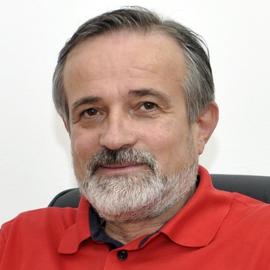
Slavko Vujević
Professor Emeritus
An expert in electrical engineering, particularly known for his contributions to numerical modeling of electromagnetic phenomena, lightning protection, and grounding. Throughout his career, he was a key member of the Faculty of Electrical Engineering, Mechanical Engineering, and Naval Architecture in Split, where he taught, mentored students, and actively participated in scientific research and international professional organizations.