Analysis of hydropower automation
Abstract
In accordance with the knowledge about the particularities of each HPP, the overall material of the study Analysis of automation of hydroelectric power plants of the Cetina watercourse …… is divided into five books, one for each hydropower plant: HPP Peruca, HPP Orlovac, HPP Dale, HPP Zakucac and HPP Kraljevac. Each book is divided into two parts. In the first part, topics related to identification and are usually specific to a specific hydroelectric power plant are covered, and in the second part, those topics that are common to all hydroelectric power plants. The first part of each book, which includes the first five chapters, deals with the identification of facilities, plants and processes, automation systems at the level of hydroelectric power plants and connection systems at the level of the Cetina basin. The term hydroelectric power plant automation means the unity of two systems. First, it is a management, signalling, protection, measurement and regulation system (USZMR) and, secondly, it is a process information system (PROCIS). The USZMR and PROCIS systems include secondary equipment for monitoring and controlling hydromechanical and primary equipment. Primary equipment includes: production units, switchgear, own consumption and auxiliary plants. The equipment in the USZMR system is directly connected to the primary equipment, and consists of measuring elements, protective devices, measuring and signaling devices, executive elements, local control units and regulation units. USZMR enables local monitoring and manual control, local automatic control and regulation and an interface to the superior level. PROCIS is an upgrade of USZMR at a higher hierarchical level that enables: individual control of functional groups, group control and remote control from the superior The identification was carried out in three ways: (1) by reviewing and analyzing available technical documentation, which was done in cooperation with operating personnel, (2) by interviewing operating personnel in cases where documentation was insufficient, and (3) by visiting and inspecting the facility. In this way, a huge amount of data was collected and presented in separate tables. Although the identification was done for the needs of the study, i.e. with less detail than is necessary when it comes to the actual implementation of the HPP automation system, it required enormous effort and time that were almost not appropriate to the given framework of the study. Namely, it turned out that for most of the data and information, it was necessary to check on in the field itself, i.e. the available documentation was not sufficient. The second, common part of the study provides an analysis of the automation system in function of the operating mode of individual HPPs (Chapter 6), and an assessment of the state of the art and technology in the field of HPP automation (Chapter 7) . In this second part of the book, according to its scope and content, the dominant chapter is Chapter 6, which provides a detailed analysis of the management and regulation functions that are already occurring or will increasingly occur in the HPPs of the Cetina River. Among other things, secondary frequency regulation and exchange power, secondary voltage and reactive power regulation, and group control of hydroelectric power plants. Some elementary theoretical issues were also addressed, which seemed necessary given the fact that there is almost no experience in the field of group control and secondary voltage and reactive power regulation in our country.Some attention is also paid to the relationship between the operation of a hydroelectric power plant and the control functions that need to be automated, and a brief analysis of the approach to reconstructing the HPP automation system is given. The seventh chapter describes the technological features important in the selection of secondary equipment for HPPs and in the construction of new infrastructure in the power system. , today and in the near future. This refers to: the pace of change in secondary technological equipment: the process of development and integration of the USZMR and PROCIS systems: the development of the generator diagnostic monitoring system, the evolution of protection system tools and the so-called super-infrastructure for improving the operation of the electric power system.
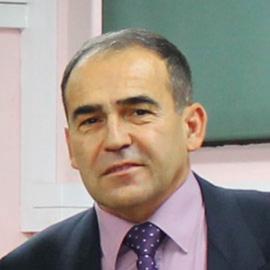
Božo Terzić
Full Professor | Department of Electrical Drives and Industrial Control
Full professor at the Faculty of Electrical Engineering, Mechanical Engineering and Naval Architecture in Split, with significant contributions in the field of industrial development projects including the design of prototypes of electronic converters used in industrial plants around the world. His research interests are focused on the application of electronic converters in electric drives and renewable energy sources.
