Report on geoelectrical and geothermal soil properties along the route of the 110 kV cable Peljesac Korcula
Abstract
All essential characteristics of the earthing conductor (distribution resistance, potential gradients, applied potential, etc.) directly depend on the specific resistance (resistivity) of the soil. Unlike technical conductors that can be considered essentially homogeneous and their resistance can be read quite precisely from technical manuals, geological environments are electrically much more complex and mostly, microscopically and macroscopically, inhomogeneous, and thus their resistance cannot be estimated even within an order of magnitude (tables and graphs in manuals). It is necessary to determine the soil resistance by direct measurements at the very place where the earthing conductor is installed. The transmission capacity and lifespan of power cables, and thus the quality and reliability of the power supply to consumers, directly depend on the ability of the environment to dissipate the heat that develops due to Joule and dielectric losses in the cable. The excess temperature of an underground power cable is proportional to the specific thermal resistance of the environment in which the cable is laid. For common geological environments, thermal resistance ranges from 40 Kcm/W to 400 Kcm/W, and cannot be estimated accurately enough for cable sizing without direct on-site measurements.
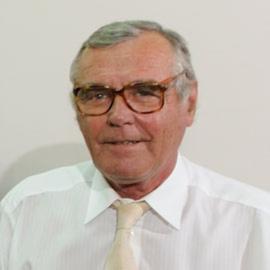
Stanko Milun
Full Professor
Faculty alumnus with a research focus in the development of measurement methods in high-voltage systems, signal analysis in electrical power systems, and the application of geoelectrical methods in energy infrastructure. Prof. Milun has been involved in numerous scientific projects, including those related to the optimization of grounding systems for high-voltage plants and the development of transient measurement methods. He has authored 38 scientific papers and over 150 professional studies.
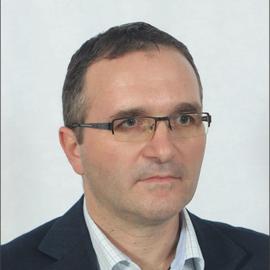
Goran Petrović
Full Professor | Department of Electrical Measurements
Prof. dr. sc. Goran Petrović is a full professor at the Faculty of Electrical Engineering, Mechanical Engineering and Architecture in Split. His research interests include measurement of electrical and process quantities, analysis of geoelectrical and geothermal features of the soil, instrumentation for smart grids, measurement and application of synchrophasors. He is the author of numerous papers published in top-tier scientific journals and contributed to valuable international and national scientific projects.