Measurement of temperature field in the model of loaded high voltage cable in the cable tunnel HE Zakucac
Abstract
As part of the revitalization of the ZAKUCAC HPP, among other things, the construction of 110 kV and 220 kV cable systems is planned on the stretch from the block transformer in the power plant’s engine room to the external facilities. Modern dry cables with cross-linked polyethylene insulation are planned to be placed on cable shelves in the tunnel connecting the engine room with the external 110/220 kV facility. Due to the importance of the Zakucac HPP in the power system of the Republic of Croatia, it is understandable that attention is paid to the correct dimensioning of these cable systems for long-term and reliable operation. The key factor for achieving this goal is the correct calculation of the cable overtemperature in operating conditions, since it is an accepted empirical fact that a permanent increase in temperature of only 7°C above the nominal can reduce the life of the facility by half. On the other hand, those involved in thermal calculations are aware of the difficulties of calculating thermal fields in complex convective conditions. Namely, the aforementioned cable systems pass through a tunnel with forced ventilation and humidification, and in the same tunnel there are other dissipative and non-dissipative installation systems. In such conditions, due to the pronounced nonlinearity of the problem, it is practically impossible to carry out a sufficiently accurate calculation of the thermal field in the static and especially in the dynamic (transient) operating mode. Therefore, research is resorted to on a physical model that is placed in a real environment. Measuring the temperature response in the dynamic mode will provide information about the behavior of the system in extreme situations and help the personnel managing the plant in assessing operational safety in such situations.
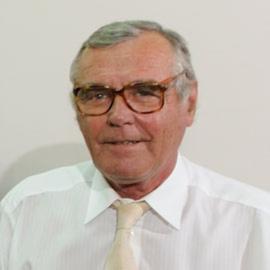
Stanko Milun
Full Professor
Faculty alumnus with a research focus in the development of measurement methods in high-voltage systems, signal analysis in electrical power systems, and the application of geoelectrical methods in energy infrastructure. Prof. Milun has been involved in numerous scientific projects, including those related to the optimization of grounding systems for high-voltage plants and the development of transient measurement methods. He has authored 38 scientific papers and over 150 professional studies.
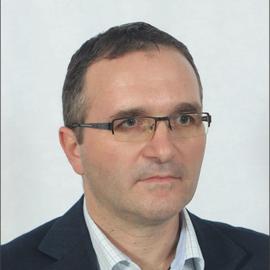
Goran Petrović
Full Professor | Department of Electrical Measurements
Prof. dr. sc. Goran Petrović is a full professor at the Faculty of Electrical Engineering, Mechanical Engineering and Architecture in Split. His research interests include measurement of electrical and process quantities, analysis of geoelectrical and geothermal features of the soil, instrumentation for smart grids, measurement and application of synchrophasors. He is the author of numerous papers published in top-tier scientific journals and contributed to valuable international and national scientific projects.