Report on the heat resistance of quartz sand Fuga Sand manufacturer Kema Slovenia
Abstract
Due to specific project requirements, primarily steep laying routes, a classic cable trench and bedding are not a suitable solution. A suitable solution is laying cables in pipes. Filling the pipe with sand improves the thermal image of the cable in two ways. Thermal conductivity is improved and convective air flows are prevented, which would cause increased heating in the upper zone. In order to ensure uniform filling without air pockets for filling the space around the cable, it is necessary to use a very loose material. In addition, in the event of a cable failure, the filling material should be easy to remove. For all of the above, quartz sand is a good solution. In this paper, its thermal resistance will be tested. The thermal resistance of any sand, including specific quartz sand, depends not only on the sand material but also on its granulometric composition and porosity (porosity) and humidity. The better the sample is compacted (lower porosity), the lower the thermal resistance. The wetness of the sample (the more conductive water in the voids replaces the air) also reduces the thermal resistance of the sand. However, the design solution with quartz sand in a pipe around the cable that can be dropped if necessary (like a clepsydra) requires the use of dry sand. Therefore, measurements were performed on a dry sample, once naturally poured, the second time by vibration.
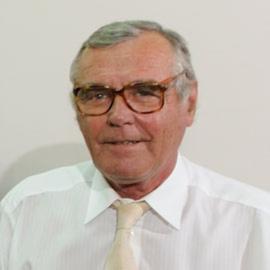
Stanko Milun
Full Professor
Faculty alumnus with a research focus in the development of measurement methods in high-voltage systems, signal analysis in electrical power systems, and the application of geoelectrical methods in energy infrastructure. Prof. Milun has been involved in numerous scientific projects, including those related to the optimization of grounding systems for high-voltage plants and the development of transient measurement methods. He has authored 38 scientific papers and over 150 professional studies.
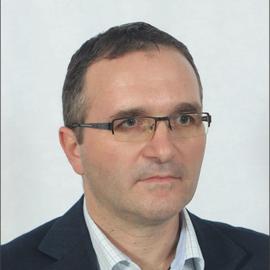
Goran Petrović
Full Professor | Department of Electrical Measurements
Prof. dr. sc. Goran Petrović is a full professor at the Faculty of Electrical Engineering, Mechanical Engineering and Architecture in Split. His research interests include measurement of electrical and process quantities, analysis of geoelectrical and geothermal features of the soil, instrumentation for smart grids, measurement and application of synchrophasors. He is the author of numerous papers published in top-tier scientific journals and contributed to valuable international and national scientific projects.