Power System Transient Stability Assessment Simulations Dataset - IEEE New England 39-bus test case
Abstract
This dataset contains phasor measurements (PMU-type) signals from the IEEE New England 39-bus power system test case network, which are generated from a large corpus of systematic MATLAB®/Simulink electro-mechanical transients simulations. It was prepared to serve as a convenient and open database for experimenting with different types of machine learning (including deep learning) techniques for transient stability assessment (TSA) of electrical power systems. A dataset contains time-domain signals from 9360 simulations. Different load and generation levels of the New England 39-bus benchmark power system are systematically covered, as well as all three major types of short-circuit events (three-phase, two-phase and single-phase faults) in all parts of the network. The consumed power of the network was set to 80%, 90%, 100%, 110% and 120% of the basic system load levels (for different system load levels, both generation and loads are scaled by the same ratio). The short-circuits are located on the busbar or on the transmission line (TL). When they are located on a TL, it was assumed that they can occur at 20%, 40%, 60%, and 80% of the line length. Timing of the fault occurrences takes into the consideration a moment on the instantaneous sinusoidal reference voltage. The observation period of each simulation was set at 3 seconds and signals are sampled at 1/60 s resolution. Many different machine electrical and mechanical (rotor and stator quantities), as well as network (three-phase currents and voltages), time-domain signals are obtained from simulations with a PMU-type resolution.

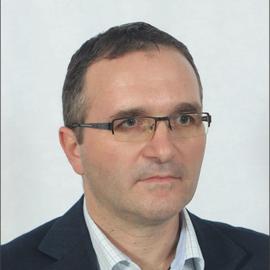
Petar Sarajčev
Full Professor | Department of Power Grids and Substations
Goran Petrović
Full Professor | Department of Electrical Measurements
Prof. dr. sc. Goran Petrović is a full professor at the Faculty of Electrical Engineering, Mechanical Engineering and Architecture in Split. His research interests include measurement of electrical and process quantities, analysis of geoelectrical and geothermal features of the soil, instrumentation for smart grids, measurement and application of synchrophasors. He is the author of numerous papers published in top-tier scientific journals and contributed to valuable international and national scientific projects.
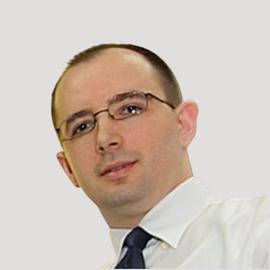
Marin Despalatović
Full Professor | Department of Electrical Drives and Industrial Control
Full professor at the Faculty of Electrical Engineering, Mechanical Engineering, and Naval Architecture in Split, where he teaches courses Electric Machines, Electric Drive Systems, and Electromechanical System Modeling. His research focuses on power systems, energy storage, and smart grid technologies, with active participation in multiple national and international projects aimed at advancing energy infrastructure and improving system stability.