Novel Space-Vector PWM Schemes for Enhancing Efficiency and Decoupled Control in Quasi-Z-Source Inverters
Abstract
This paper investigates the development of pulse width modulation (PWM) schemes for three-phase quasi-Z-source inverters (qZSIs). These inverters are notable for their voltage boost capability, built-in short-circuit protection, and continuous input current, making them suitable for low-voltage-fed applications like photovoltaic or fuel cell-based systems. Despite their advantages, qZSIs confront challenges such as increased control complexity and a larger number of passive components compared to traditional voltage source inverters (VSIs). In addition, most existing PWM schemes for qZSIs lack the capability for independent control of the amplitude modulation index and duty cycle, which is essential in closed-loop applications. This study introduces innovative space-vector PWM (SVPWM) schemes, addressing issues of independent control, synchronization, and unintentional short-circuiting in qZSIs. It evaluates several established continuous and discontinuous PWM schemes, and proposes two novel decoupled SVPWM-based schemes that integrate dead time and in which the shoot-through occurrence is synchronized with the beginning of the zero switching state. These novel schemes are designed to reduce switching losses and improve qZSI controllability. Experimental validation is conducted using a custom-developed electronic circuit board that enables the implementation of a range of PWM schemes, including the newly proposed ones. The obtained results indicate that the proposed PWM schemes can offer up to 6.8% greater efficiency and up to 7.5% reduced voltage stress compared to the closest competing PWM scheme from the literature. In addition, they contribute to reducing the electromagnetic interference and thermal stress of the related semiconductor switches.
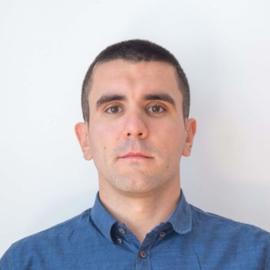
Ivan Grgić
Assistant Professor | Department of Power Electronics and Control
Assistant professor at the Faculty of Electrical Engineering, Mechanical Engineering and Architecture in Split, specialized in the research of power electronic converters in photovoltaic systems and microgrids. Currently, he teaches courses in the areas of control engineering, digital electronics, electrical engineering, electrical machines and transformers.
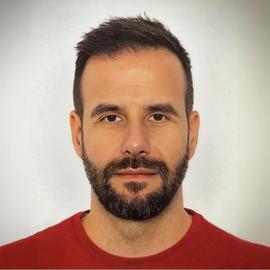
Mateo Bašić
Full Professor | Department of Power Electronics and Control
Full professor at the Faculty of Electrical Engineering, Mechanical Engineering and Naval Architecture in Split, with recent research interests related to the fields of power electronics and renewable energy sources, with a special focus on energy-efficient control of inverters, battery systems, wind turbines, photovoltaic sources and self-excited induction generators in microgrids - both in island operation and in grid-tie operation.
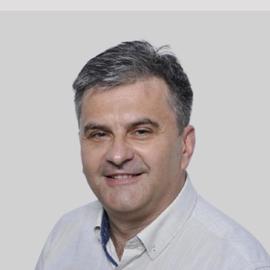
Dinko Vukadinović
Full Professor | Department of Power Electronics and Control
Full professor at the Faculty of Electrical Engineering, Mechanical Engineering, and Naval Architecture in Split, specialized in modern control systems for power electronic converters, electric motors, and generators. At the Power Electronics Research Laboratory, he leads experimental projects and develops advanced methods for regulating electrical machines and converters, while supervising doctoral research in these areas.