Numerical Model for Computation of Induced Voltages along Double-circuit Overhead Transmission Lines
Abstract
This paper presents a simple and reliable algorithm for the harmonic analysis of both current and voltage conditions along double-circuit system overhead transmission lines. The developed numerical model is based on the finite element technique which is essential in the process of reducing the problem of solving a complicated system to the problem of solving a subsystem, for which we can easily define a local system of equations based on a mathematical model. To calculate the short-circuit current distribution along the considered double-circuit system overhead transmission lines, it is necessary to divide the entire transmission line into as many finite elements as there are spans between power line towers. It is also necessary to model the grounding of each tower as a separate finite element. An assumed hydroelectric power plant with associated generators and incident network are also shown as separate finite elements with associated parameters. The safety of the maintenance worker on the disconnected and passive circuit of double-circuit overhead transmission line system is directly related to the induced voltages at the worksite. As a worst-case scenario from the standpoint of induced voltages, we considered the case of a single-phase earth fault on the active circuit of a double-circuit overhead transmission line system, where the highest possible single-phase earth fault current value has been taken into account. During this fault, the passive circuit of the double-circuit overhead transmission line system is grounded on both ends of the line. Induced voltages were analyzed in the case of a grounded worksite tower and two adjacent towers along the entire double-circuit system overhead transmission lines system.
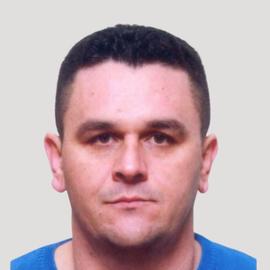
Ivica Jurić-Grgić
Full Professor | Department of Theoretical Electrical Engineering and Modelling
Researcher and full professor at the Faculty of Electrical Engineering, Mechanical Engineering, and Naval Architecture in Split. His research focuses on numerical modeling of electromagnetic transients in power systems, with particular emphasis on the development of advanced numerical methods for analyzing electromagnetic transients in multi-conductor transmission lines. His work includes the application of finite element techniques for transient stability analysis of power systems, as well as the enhancement of models for harmonic and transient analysis of grounding systems.

Dino Lovrić
Associate Professor | Department of Theoretical Electrical Engineering and Modelling
Associate professor at the Faculty of Electrical Engineering, Mechanical Engineering and Naval Architecture in Split, with reserch focused on the development of numerical models of grounding systems in various types of soil, particularly in scenarios involving the dissipation of alternating current and transient currents caused by lightning strikes or switching overvoltages, also involved in developing models of dynamic and transient processes in power systems using modern numerical methods.

Ivan Krolo
Assistant Professor | Department of Theoretical Electrical Engineering and Modelling
Researcher and assistant professor at the Faculty of Electrical Engineering, Mechanical Engineering, and Naval Architecture in Split, with research focus on the development of numerical models for grounding systems and issues related to electrical safety in low-voltage and high-voltage systems.