Abstract
In this paper, a numerical model for the analysis of electromagnetic transients in a power system, based on the finite element technique, was developed. The simplicity of the finite element technique is manifested in the fact that the problem of solving any mathematically described phenomena in an area is reduced to solving those same phenomena in a small part of that area, i.e., finite elements. Based on appropriate mathematical models, numerical models of the synchronous generator and other parts of the power system have been developed. System of differential equations of each power system element have been included in the numerical model in such a way that we employ numerical integration of the differential equations using the generalized trapezoidal rule (ϑ-method) and reduce it to a system of algebraic equations in each time step. In a practical sense, this method enables a very simple solution to the problem of a real power system, i.e., a system with many generators, transformers, transmission lines and other elements. The accuracy of the developed numerical model for the analysis of electromagnetic transients in a power system has been confirmed by comparing the calculated results with the results obtained using the EMTP software (version 3.3) package.
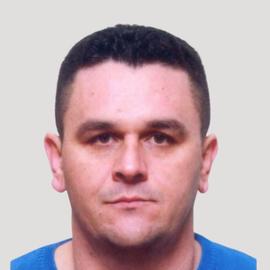
Ivica Jurić-Grgić
Full Professor | Department of Theoretical Electrical Engineering and Modelling
Researcher and full professor at the Faculty of Electrical Engineering, Mechanical Engineering, and Naval Architecture in Split. His research focuses on numerical modeling of electromagnetic transients in power systems, with particular emphasis on the development of advanced numerical methods for analyzing electromagnetic transients in multi-conductor transmission lines. His work includes the application of finite element techniques for transient stability analysis of power systems, as well as the enhancement of models for harmonic and transient analysis of grounding systems.
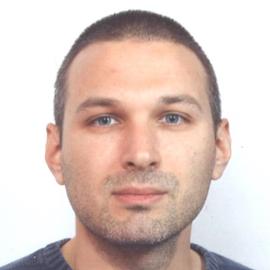
Dino Lovrić
Associate Professor | Department of Theoretical Electrical Engineering and Modelling
Associate professor at the Faculty of Electrical Engineering, Mechanical Engineering and Naval Architecture in Split, with reserch focused on the development of numerical models of grounding systems in various types of soil, particularly in scenarios involving the dissipation of alternating current and transient currents caused by lightning strikes or switching overvoltages, also involved in developing models of dynamic and transient processes in power systems using modern numerical methods.

Ivan Krolo
Assistant Professor | Department of Theoretical Electrical Engineering and Modelling
Researcher and assistant professor at the Faculty of Electrical Engineering, Mechanical Engineering, and Naval Architecture in Split, with research focus on the development of numerical models for grounding systems and issues related to electrical safety in low-voltage and high-voltage systems.