A highly accurate algorithm for computation of complex-valued Bessel, Neumann and Hankel functions of integer order
Abstract
In this paper, a highly accurate algorithm for computation of complex-valued Bessel, Neumann and Hankel functions of integer order is given. The algorithm enables the computation of these functions in the entire complex plane with quadruple precision, which can be reduced to double precision. The complex values of the Bessel and Neumann functions of the zeroth and first order can be computed in a special way for small, medium-sized and large arguments in the first quadrant of the complex plane. The mapping of functions from the first quadrant to the other quadrants is described by simple formulas. Bessel and Neumann functions of higher positive integer order can be computed using forward and backward recurrence relations. Two types of Hankel functions are linear combinations of the Bessel and Neumann functions. Bessel, Neumann and Hankel functions of negative integer order are equal to positive order functions up to the sign.
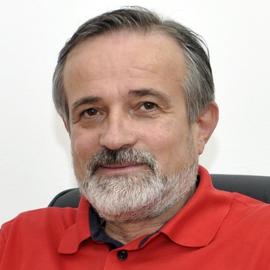
Slavko Vujević
Professor Emeritus
An expert in electrical engineering, particularly known for his contributions to numerical modeling of electromagnetic phenomena, lightning protection, and grounding. Throughout his career, he was a key member of the Faculty of Electrical Engineering, Mechanical Engineering, and Naval Architecture in Split, where he taught, mentored students, and actively participated in scientific research and international professional organizations.

Tonći Modrić
Associate Professor | Department of Electrical Intallations and Systems
Researcher and Full Professor at the Faculty of Electrical Engineering, Mechanical Engineering, and Naval Architecture in Split. His research focus is numerical modeling and calculation of the electric and magnetic fields in power systems and transmission lines, with an emphasis on the development of advanced models for interpreting geoelectrical ground survey data. Additionally, he is involved in the analysis of electromagnetic transients in systems with a high share of renewable energy sources, using finite element techniques.