Recent Advances in Power Quality Analysis and Robust Control of Renewable Energy Sources in Power Grids
Abstract
In modern power grids with a large share of distributed power production, achieving high power quality is a challenging task. The integration of renewable energy sources (RES) into power grids has introduced various disturbances such as harmonic distortions, voltage sags, frequency variations, voltage unbalance, etc.), leading to power quality degradation. In particular, the variable nature of RESs may cause rapid voltage changes, and consequently, the protection system can cause the disconnection of power system parts. To enable flexible operation of RESs, voltage source converters and associated control systems are necessary. Very often, several RESs with storage devices, loads, and voltage source converters are connected in so-called microgrids. Microgrids are an emerging concept, closely connected with power quality, novel control methods, internet of things, and cyber security, etc. They are designed to function either in grid-connected or standalone mode, depending upon their energy potential and grid code requirements. Keeping in mind that about 30% of world electricity generation comes from RESs (including hydropower), problems and challenges of the RESs’ integration into power grids and the design of associated control systems are the focus of many researchers. The objective of this Special Issue is to bring together recent and high-quality papers related to the theory and practice of power quality in power grids with a significant share of RESs. Relevant topics include, but are not limited to: Power Quality Monitoring Control of Power Quality Mitigation Devices Active Filtering of Voltage and Current harmonics Power Quality Problems Mitigation Control Methods in AC, DC, and Hybrid Microgrids Advanced Control Methods of Power Converters Stability of Microgrids Control of Storage Devices Advances in Economic Aspects of Microgrids Cyber Security, Data Processing and Smart Loads in Microgrids Electromagnetic Interference in Microgrids
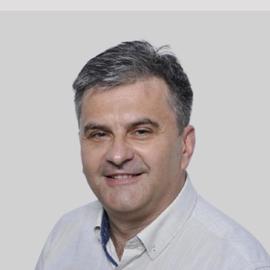
Dinko Vukadinović
Full Professor | Department of Power Electronics and Control
Full professor at the Faculty of Electrical Engineering, Mechanical Engineering, and Naval Architecture in Split, specialized in modern control systems for power electronic converters, electric motors, and generators. At the Power Electronics Research Laboratory, he leads experimental projects and develops advanced methods for regulating electrical machines and converters, while supervising doctoral research in these areas.